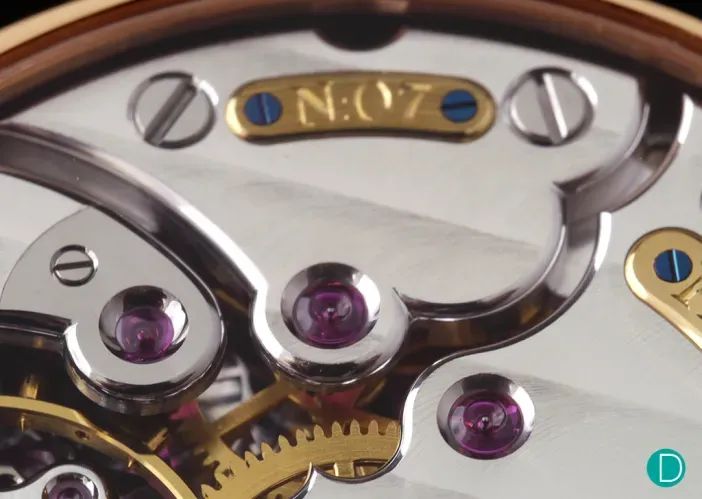
Philippe Dufour does not have employees. This is the first thing to understand, because it is the fact from which everything else about his work follows. The movement you acquire when you acquire a Dufour Simplicity was made by one man, working alone, in a workshop in Le Solliat in the Swiss Jura. The bridges were filed by his hands. The wheels were polished on his laps. The bevelling — the anglage that runs along every edge of every component — was cut with a file held at exactly the correct angle, which is the angle learned through the execution of an apprenticeship and the subsequent practice of decades.
This is presented, in most accounts, as romantic. It is actually practical. The finishing quality of a Dufour movement is superior to that of movements finished by teams of specialists working at higher volume because Dufour applies the same attention to every component regardless of its visibility, and because the decision about when a component is finished is made by the same person who began it. There is no handoff. There is no moment at which the work becomes someone else's problem.
The Simplicity — the three-hand watch that constitutes most of Dufour's production — is named correctly. The movement, in rose gold, with a lever escapement and a hand-wound mainspring, tells the time. This is its only function. The decorative vocabulary — the hand-engraved bridges, the black-polished steel components, the engine-turned dial — is not a separate layer applied over the mechanical content. It is the same thing expressed in two registers simultaneously: a movement of exceptional quality and an object of exceptional beauty, which are, in this case, a single achievement expressed twice.
The secondary market price — CHF 340,000 for a clean example, up 8.1% in the past year — is the market's acknowledgement of what the horological community established some time ago: that the Simplicity is the fullest realisation of hand craft in watchmaking, and that Philippe Dufour is the last maker for whom the phrase "made by hand" carries its original meaning rather than a marketing approximation of it.
Dufour has said that he will make watches until he cannot. He is sixty-nine years old. The number of Simplicity watches in existence will not grow significantly. Those that exist will not be improved upon, because improvement is not the category in which they compete. They compete in the category of things made with total commitment by a person who understood exactly what he was doing and chose, every day for forty years, to do it.
There is no argument against buying one. There is only the argument of availability, which is the argument of luck and timing and the cultivation of the right relationships over a sufficient number of years. This is not an argument against the watch. It is a description of its nature.