There are watches that are considered important, and there are watches that actually are. The distinction matters more than the industry likes to admit, because importance — in horology as in most fields — is often assigned by marketing departments operating with considerable budgets and limited shame.
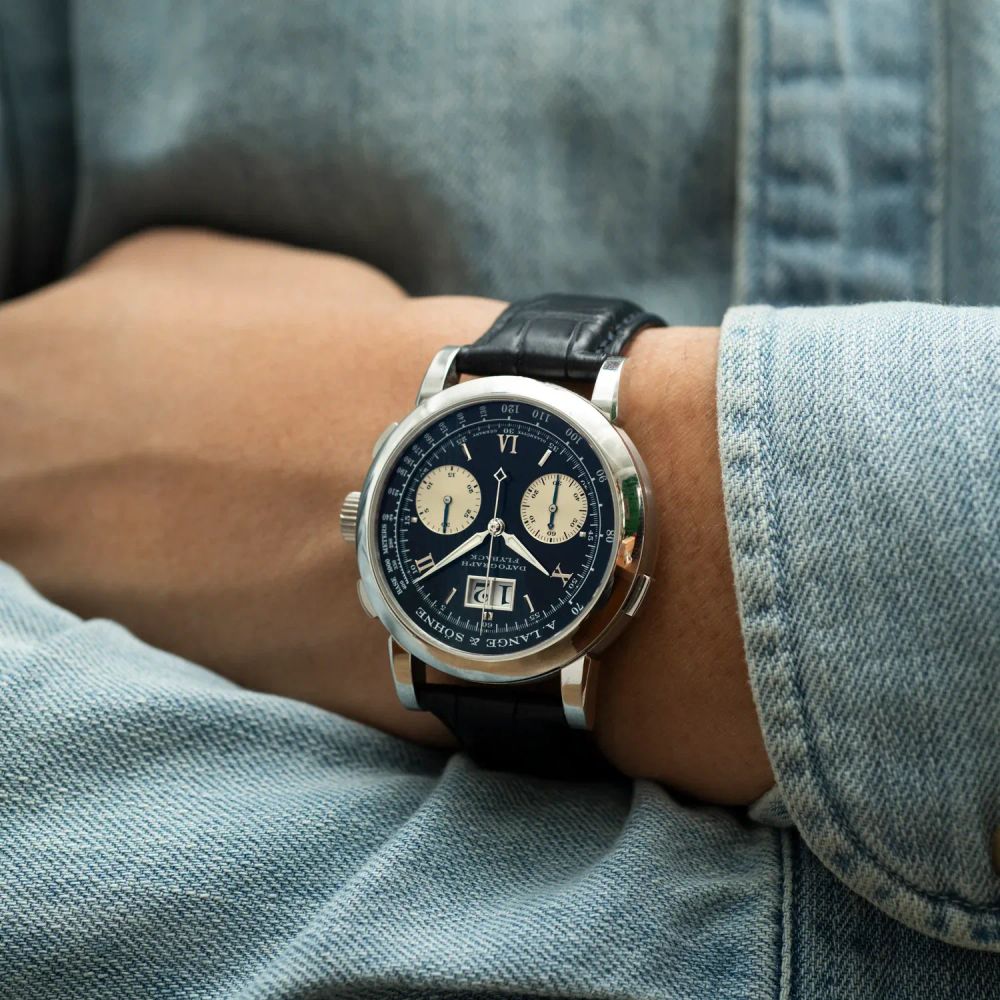
The A. Lange & Söhne Datograph Up/Down is actually important. This requires some explanation, because the watch is not showy in the manner that importance is usually performed. There are no skeletonised bridges revealing theatrical complications. There is no tourbillon spinning at the dial's six o'clock like a trained animal. What there is, instead, is a chronograph mechanism of such considered elegance that spending time with it feels less like looking at a watch and more like reading a very good sentence — one where every word is exactly the right word, positioned with complete intention.
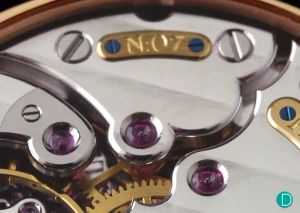
The movement, the L951.6, contains a column wheel visible through the dial, a precisely jumping minute counter, and a flyback function that resets and restarts the chronograph in a single pusher depression. These are not novelties. They are the correct answers to engineering problems that most manufacturers address with compromises. Lange has declined to compromise.
The case is German silver — an alloy of copper, zinc and nickel with no silver content whatsoever, named for its appearance rather than its composition, which seems fitting for an industry that prizes authenticity while speaking constantly in metaphor. At 41mm in platinum, it sits on the wrist with the particular authority of something that has nothing to prove. The dial is argenté, the registers and power reserve indicator rendered in subsidiary dials of such refinement that the overall effect is of organised clarity — information made beautiful by the confidence of its arrangement.
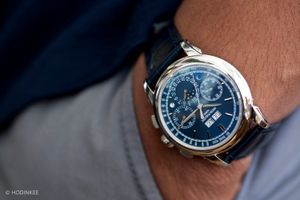
What is most remarkable about the Datograph is its age. Introduced in 1999, it has been iterated rather than replaced — the Up/Down power reserve complication was added in 2012 — and in the intervening years it has not been surpassed. Competitors have attempted to match it. Patek Philippe's split-seconds chronographs are technically more complex. FP Journe's Chronographe Souverain is arguably more innovative in its use of a constant-force mechanism. But none of them are more convincing as a complete statement.
The current secondary market price — CHF 88,000 in platinum, with a 3.2% uplift year-on-year — reflects a watch whose owners rarely sell willingly. When Datographs do appear at auction, they are contested. This is the market's way of expressing what critics have been saying for a quarter century: that Glashütte, a town of four thousand people in the Erzgebirge mountains, produced something that Geneva and the Vallée de Joux have not bettered.
That this watch is made in Germany is still, in some quarters, considered a provocation. Fine watchmaking, the received wisdom holds, is Swiss. Lange has been quietly dismantling this consensus since 1994 and has, at this point, largely succeeded. The argument is over. The Datograph won it.