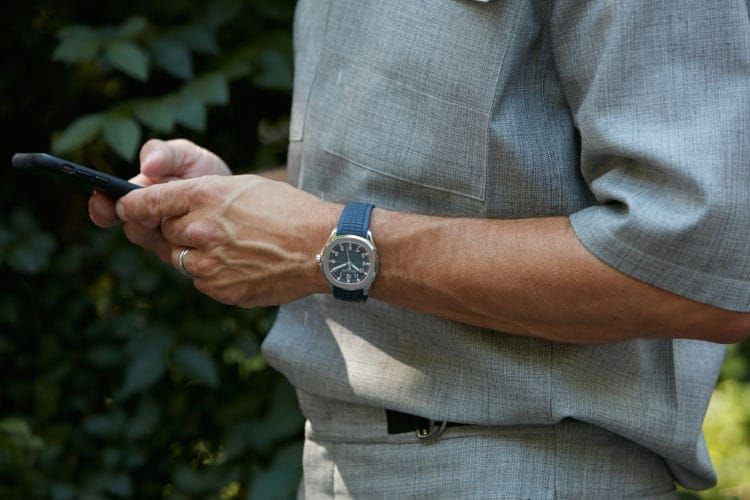
At thirty, I wanted watches that announced themselves. Not vulgarly — I had sufficient taste for that — but audibly, to the people whose opinion I had decided mattered. The Royal Oak. The Nautilus. The Daytona. The vocabulary of horological achievement as understood by someone who had read the right publications and arrived at the correct conclusions without yet having done the work of questioning them.
This is not a criticism of those references. They are, each of them, significant objects with genuine mechanical and aesthetic credentials. It is a description of what I wanted them for, which was not — primarily — those credentials.
At forty, something had shifted. I cannot locate the precise moment, because it was not a moment. It was an accumulation of afternoons spent with movements under a loupe, of conversations with collectors whose knowledge exceeded mine in ways that were humbling and educational, of gradually understanding that the qualities I had initially sought in watches — recognisability, social legibility, the confirmation of belonging to a group — were not the qualities that made an object worth living with over time.
The watches worth living with over time are not necessarily the ones that announce themselves. They are the ones that reward the kind of attention that only you can give them, in the private moments of a day when you look at your wrist for no reason other than to look at your wrist. The ones whose dials repay extended examination. The ones whose movements — glimpsed through the case back, or studied through reference materials when sleep is not arriving — continue to reveal something new.
For me, this was an early Lange Datograph, acquired through circumstances that involved a degree of financial discomfort I would not replicate but do not regret. The watch is not legible to most of the people I encounter wearing it. This is, I have come to understand, part of its appeal — the appeal not of obscurantism but of specificity. The watch is for me, and for the diminishing number of people who know immediately what it is, and for no one else. This feels correct in a way that the Royal Oak, for all its genuine excellence, did not.
What changes between thirty and forty is not taste, precisely. Taste is present at thirty and often quite good. What changes is the question you are asking the watch to answer. At thirty, the question is "who am I?" — or rather, "who do I wish to be understood as?" At forty, if things have gone reasonably well, you already know. The question the watch is now asked to answer is different, quieter, and more interesting.
It is: what is worth your sustained attention?
The answer to that question is different for everyone, which is the only thing that makes collecting, ultimately, a personal rather than a social activity. The collection that reflects you — your specific curiosity, your particular history of attention, your accumulated sense of what makes mechanical objects significant — is not the collection recommended by any market report or consumed by any algorithm.
It is the one you would build if no one were watching.
Most collectors get there eventually. The lucky ones get there before they have spent too much time building the other kind.